Iceland is famous for its dramatic landscapes of fire and ice. You can hike up active volcanoes, walk across ancient glaciers, and stand behind thundering waterfalls. But one of the country’s most incredible experiences hides entirely underwater.
Located inside Thingvellir National Park, the Silfra fissure is a massive tear in the Earth’s crust. It’s the exact point where the North American and Eurasian tectonic plates are pulling apart. As these giant plates separate, they create a deep, rocky canyon filled with glacial meltwater.
Taking the plunge into this canyon puts you directly in the void between two continents. But the mind-bending geology is only half the story. Travelers worldwide seek the sensory thrill of swimming in Earth’s clearest waters. If you’re wondering what it actually feels like to slip into freezing glacial water and float through a tectonic divide, here is everything you need to know to prepare for the trip.
The Clearest Water on Earth
The secret to this legendary visibility lies in the water’s unique journey. It doesn’t wash in from a river or the ocean, but originates as pure meltwater from Langjökull, Iceland’s second-largest glacier.
However, this meltwater doesn’t flow directly into Thingvellir Lake. Instead, it sinks underground into a massive field of porous lava rock, acting as a giant natural sponge and filter. The water spends the next 30 to 100 years slowly trickling through it before finally seeping out into the Silfra fissure.
By the time the water reaches the canyon, it’s so unbelievably crisp and clean that you can actually drink it right through your snorkel. Thanks to this decades-long filtration process, underwater visibility exceeds 100 meters, or over 300 feet. With virtually no silt, dirt, or marine life to cloud the view, the clarity is extreme enough to create optical illusions, making the depth incredibly difficult to judge from the surface.
The Sensory Experience: What to Expect
Reading about the water temperature is one thing, but actually getting into the water is another. Here is a breakdown of what you’ll feel from the moment you step off the metal platform into the fissure.
The Initial Shock of the Cold
Sitting at a constant 2°C to 4°C (35°F to 39°F) year-round, the water in Silfra is always barely above freezing, whether you visit on a sunny July afternoon or a snowy January morning.
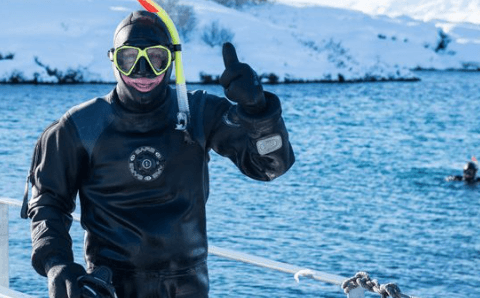
To combat this, you’ll wear a heavy-duty dry suit over your thermal base layers to keep your body completely dry and insulated. Your head and hands, however, rely on thick neoprene wet gloves and a hood. Since neoprene lets a thin layer of water in, your natural body heat will quickly warm that trapped moisture.
When you finally put your face in the water, the cold hits your exposed lips and cheeks with a sharp, breathtaking shock. Fortunately, this intense sensation only lasts a few minutes before the cold naturally numbs your skin. Once your body adjusts, you’ll completely forget about the temperature as the visual spectacle takes over.
The Feeling of Weightlessness
Because a dry suit traps air inside, it makes you incredibly buoyant, eliminating the need to tread water or swim hard to stay afloat. In fact, it’s difficult to swim downward even if you try.
You simply lie flat on your stomach and let the water do the work. As the gentle current slowly pushes you through the canyon, the experience feels less like swimming and much more like floating in zero gravity, leaving you hovering weightlessly above jagged rock walls that drop into deep blue darkness.
The Profound Silence
Beyond the visuals, one of the most surprising parts of the Silfra experience is the absolute quiet. Once you submerge your ears in the thick neoprene hood, the sounds of the wind and other people completely vanish. Left with only the slow, rhythmic sound of your own breathing through the snorkel, this deep silence adds to the feeling that you’re exploring an entirely different planet.
See also: Luxor Tours That Offer Culture History and Timeless Travel Memories
Journey Through the Fissure: The Four Sections
A typical snorkeling or diving tour keeps you in the water for about 30 to 40 minutes, with the gentle current carrying you through four distinct sections of the canyon.
- The Big Crack: As the narrowest section of the fissure, this is where you get the famous photo opportunity, easily reaching out to touch the North American plate with one hand and the Eurasian plate with the other.
- Silfra Hall: Here, the canyon suddenly widens, and the colors shift dramatically from dark greens to vibrant, neon blues that look almost unnatural.
- Silfra Cathedral: As the deepest and most majestic section of the dive, the Cathedral’s walls drop straight down for 20 meters (65 feet). Thanks to the flawless visibility, you can see every single rock resting on the bottom as clearly as if you were looking through glass.
- Silfra Lagoon: Finally, the fissure opens into a wide, shallow lagoon where sunlight catches the water, creating a beautiful, shimmering mirror effect on the surface before you exit.
Snorkeling vs. Diving: Which Should You Choose?
Visitors often wonder if they should snorkel or scuba dive. While both offer incredible views of the tectonic plates, they deliver two entirely different sensory experiences.
Snorkeling Silfra
As the most popular choice by far, snorkeling delivers a pure, unencumbered sensation of flying over a submerged mountain range. Without the weight of heavy air tanks or complex gear, you can completely surrender to the gentle current. You float effortlessly on the surface, gazing down through 100 meters of perfect visibility to take in the vivid colors in a relaxed, almost Zen-like state. It’s highly accessible to almost anyone comfortable in the water who meets the basic medical requirements.
Diving Silfra
Scuba diving in Silfra is an immersive, highly technical thrill. Instead of hovering above the canyon, you feel the enveloping weight of the water as you sink directly into the tectonic divide. Gliding through shadowed crevices and swimming face-to-face with towering rock walls up to 18 meters (60 feet) below the surface creates a profound sense of isolation and scale. Because of this demanding environment, a basic open water certification isn’t enough—you must be a certified PADI Dry Suit Diver with logged dry suit dives.
Practical Preparation and Choosing a Guide
Preparation is everything when standing in the crisp Icelandic air, getting ready to face glacial water. Your physical comfort and your ability to truly enjoy the float depend heavily on how you layer up before you even reach the fissure.
What to wear on the day of your tour:
- A thermal base layer: A snug, close-fitting layer of merino wool or high-quality synthetic material acts as a warm second skin.
- A warm mid-layer: Adding a plush fleece or a thick wool sweater creates a cozy cocoon of trapped body heat under your suit.
- Thick wool socks: Since your toes feel the chill the fastest, two pairs of heavy wool socks are your best defense against the cold.
- No cotton: Avoid jeans, cotton t-shirts, or cotton socks entirely. Cotton traps cold, damp moisture directly against your body, turning a magical float into a freezing ordeal.
Slipping into a glacial rift is thrilling, but it shouldn’t feel nerve-wracking. Having expert guidance gives you the peace of mind to let go and surrender to the current. Arctic Adventures has spent decades guiding travelers through Iceland’s most extreme environments, focusing strictly on safety, small-group sizes, and environmental respect. Their certified divemasters ensure your dry suit hugs you perfectly and keep a close, comforting eye on you in the water, so all you feel is awe as you take in the view.
A Bucket-List Experience
There are very few places on Earth where geology, history, and raw natural beauty combine quite like this. While taking the plunge into freezing glacial water might sound intimidating at first, the cold completely fades away the moment you look down into the endless blue of the Silfra Cathedral.
Whether you’re a seasoned scuba diver or a first-time snorkeler, swimming between tectonic plates in the clearest water on the planet is an experience that stays with you long after you leave Iceland. Pack your thermal layers, prepare for the initial chill, and get ready to float through one of the world’s most remarkable underwater landscapes.
Frequently Asked Questions
If you still have a few concerns before taking the plunge, here are some of the most common questions about what this incredible experience actually feels like.
Will I feel freezing cold the entire time?
While the water is undeniably icy, you won’t feel chilled to the bone. Your thermal layers and the dry suit act as a powerful barrier, keeping your core completely warm and dry. You will only feel the sharp cold on your exposed cheeks and lips at first. That sensation quickly fades into a gentle numbness, letting you focus entirely on the beautiful underwater sights.
Does the dry suit feel tight or restrictive?
It can definitely feel strange and tight while you stand on land. The heavy rubber seals must hug your neck and wrists securely to prevent freezing water from leaking inside. However, the moment you slip into the canyon, that squeezing sensation vanishes. It’s instantly replaced by a wonderful, weightless feeling of pure buoyancy.
Will I feel safe floating in the current?
Absolutely. Even if the bulky gear feels awkward at first, the trapped air inside the suit makes you float effortlessly on the surface. You don’t have to fight the water or swim hard to stay afloat. Plus, expert guides stay right by your side in the water. Arctic Adventures ensures you feel completely secure and relaxed from the second you step off the platform.